

How to Prioritize Your Wedding Budget During DIY Wedding Planning
Planning a wedding on your own can feel exciting at first, but the budget can quickly
become the hardest part. There are so many choices, ideas, and small costs that it becomes
easy to lose track.
A clear budget helps you spend on what truly matters instead of feeling pulled in every
direction. With DIY wedding planning, the goal is not to do everything yourself. The goal is
to make thoughtful choices, stay organized, and create a wedding that feels right for you
and your partner.
Start With What Matters Most
Before you write down numbers, talk about what matters most for your wedding day.
Every couple has different priorities. Some care most about food, while others want a
beautiful setting, simple décor, or a relaxed celebration with close family and friends.
Start by choosing your top three wedding priorities. These are the areas where you are
most comfortable spending more of your budget.
Your priorities may include:
A meaningful ceremony
A comfortable guest experience
A simple but beautiful reception
Personal decorations
A stress-free planning process
A wedding timeline that feels manageable
When you know what matters most, it becomes easier to say no to extras. This also keeps
your planning focused and less emotional when new ideas appear.
Set a Realistic Total Budget First
A wedding budget should begin with one clear total amount. This is the full amount you can
spend without causing stress later. Avoid building your budget around wishful thinking or
future savings that may not happen.
Be honest about what you can manage. Include money already saved, planned
contributions, and any amount you are comfortable setting aside. Once you have the full
number, divide it into categories.
Common wedding budget categories include:
Wedding location setup
Food and drinks
Wedding outfits
Décor and flowers
Invitations and stationery
Photography or memories
Beauty and grooming
Transportation
Emergency or backup costs
This first step gives you a clear limit. It also helps prevent small decisions from turning into
large unexpected expenses.
Separate Needs From Nice-To-Haves
One of the best ways to control wedding spending is to separate needs from nice-to-haves.
Needs are the items that directly support the wedding day. Nice-to-haves are extras that
may look lovely but are not required.
Use this simple table to guide your decisions:
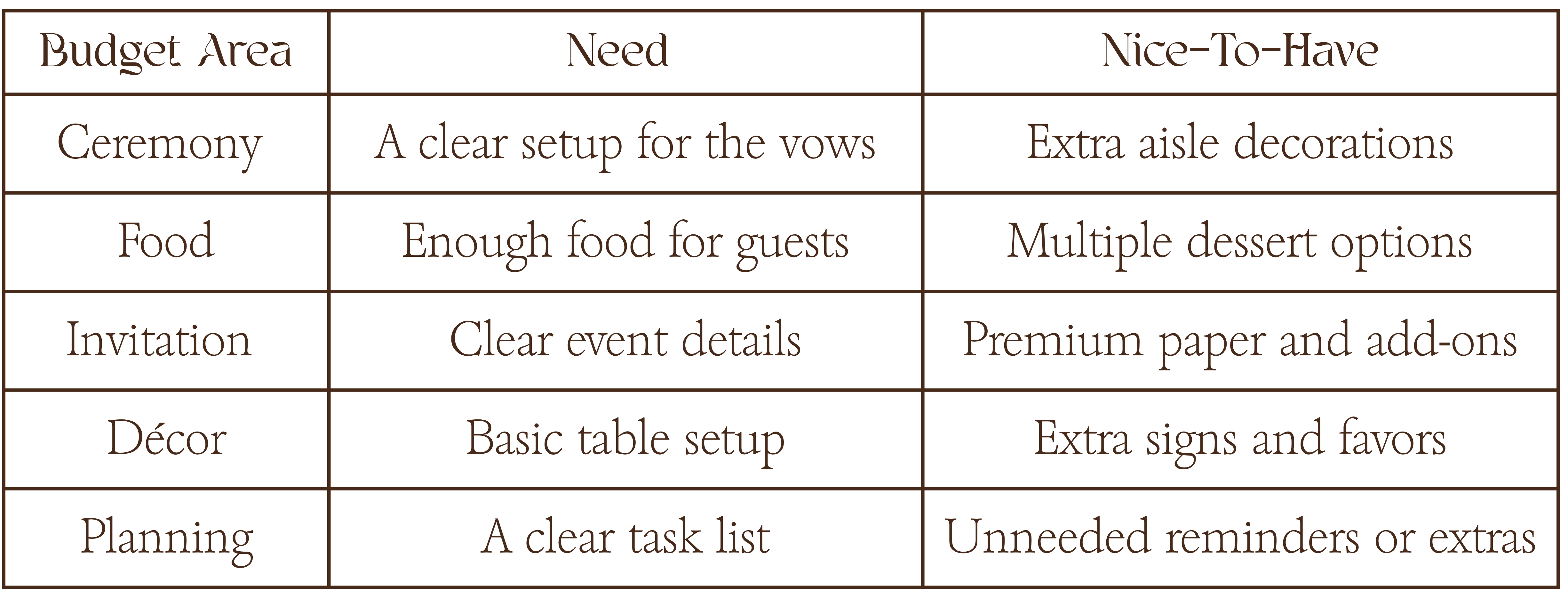
This does not mean nice-to-haves are bad. It only means they should come after the
important items are covered. A wedding can still feel special without every extra detail.
Build Your Budget Around Your Timeline
Your wedding timeline affects your budget more than many couples expect. A wedding
planned within three months may need faster choices and fewer projects. A longer timeline
may allow more room for DIY work, saving, and careful comparison.
Think about how much time you really have before choosing what to do yourself. Some DIY
projects look simple but take many hours to finish. If your wedding is soon, focus on simple
ideas that are easy to complete.
A timeline-based budget helps you decide:
What must be paid first
Which tasks need early attention
What can be simplified
Which DIY ideas are realistic
Where you need backup plans
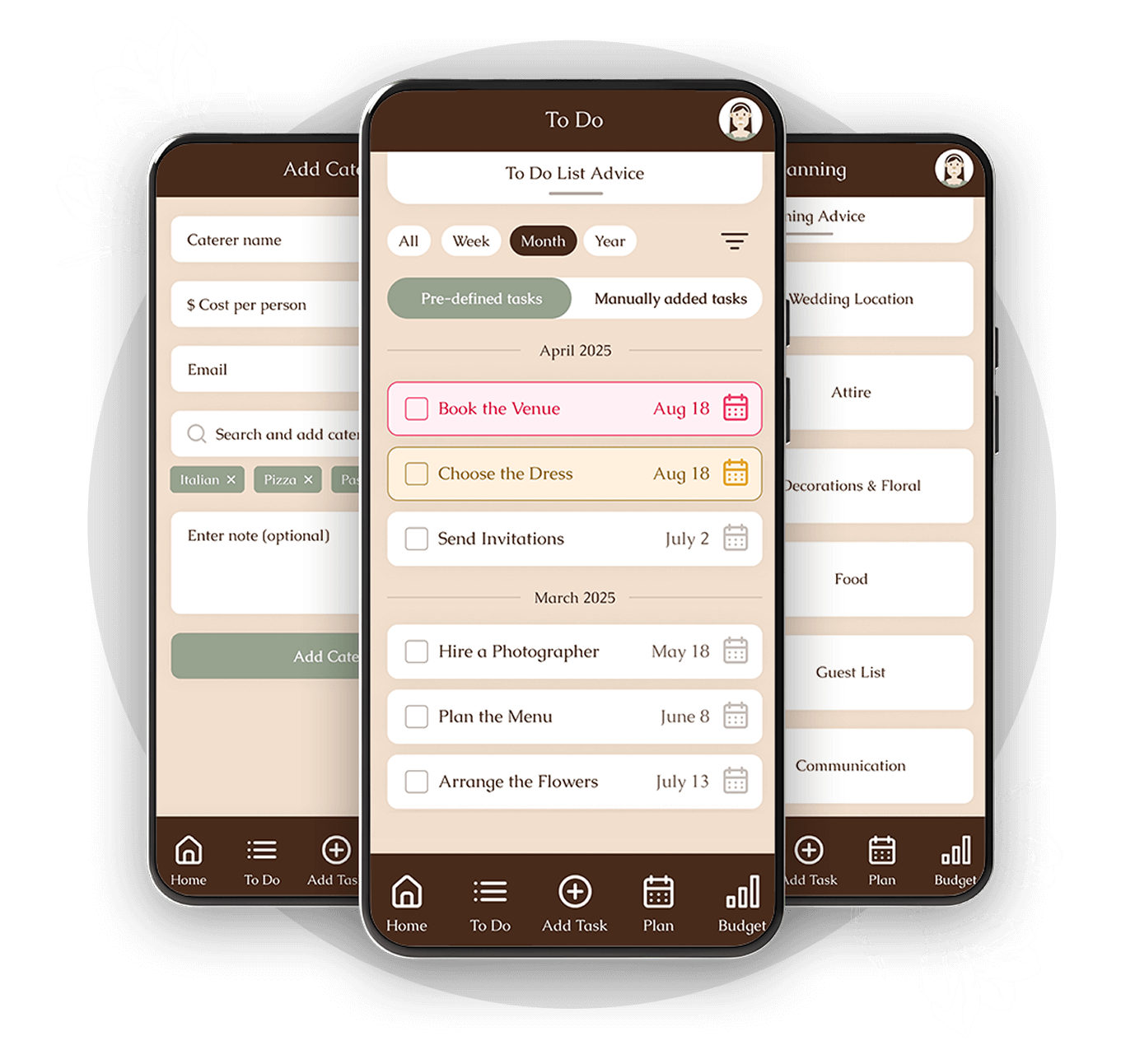
Bridal Your Way helps couples build plans around their own timeline, so the budget and
task list stay connected from the beginning.
Use Cost Estimates Before Making Decisions
Cost estimates help you understand where your money may go before you commit. This is
especially helpful when comparing ideas, supplies, and wedding categories. Without
estimates, it is easy to assume something will be cheaper than it really is.
Before buying anything, write down the expected cost and check how it fits into your
budget. Even small items can add up when you need many of them.
Useful items to estimate early include:
DIY décor supplies
Invitation materials
Meal or snack costs
Table setup items
Wedding outfit changes
Beauty products
Last-minute supplies
The Bridal Your Way app includes real-time cost estimates to help couples allocate their
budget across categories in a more realistic way.
Cut Extras That Do Not Match Your Vision
Wedding spending often grows because of pressure. Couples may feel they need certain
details because they saw them somewhere else or because people expect them. These
extras can quickly take money away from the parts that matter more.
Give yourself permission to skip what does not fit your wedding. You do not need to
include every tradition, trend, or decoration. Your wedding should feel like your
celebration, not a checklist built by someone else.
You may choose to skip:
Extra favors that guests may not use
Décor for areas guests barely see
Expensive invitation upgrades
Too many outfit changes
Overly detailed table displays
Add-ons that do not improve the day
Bridal Your Way is built around the idea of planning only what matters to you, instead of
filling your list with things you never wanted.
Use Tools That Keep Planning Simple
Wedding planning becomes harder when information is scattered across notes, messages,
lists, and guesses. A simple planning tool can help you stay focused and avoid confusion.
Bridal Your Way gives couples a step-by-step guide with budget-friendly ideas, checklists,
cost estimates, DIY tutorials, and custom to-dos. This can be helpful when you want a clear
roadmap without extra tasks that do not match your plans.
The right planning support should help you feel calm, not overwhelmed. It should make
your budget easier to understand and your timeline easier to follow.
Conclusion
A wedding budget works best when it reflects your real life, not outside pressure. Start
with your total amount, choose your main priorities, and spend first on the details that
matter most. Use estimates, simple checklists, and weekly reviews to stay aware of every
choice.
With DIY wedding planning, you can create a meaningful celebration without losing control
of your time, money, or peace of mind. The best plan is one that helps you enjoy the process
and feel ready for your wedding day.