

Solo Wedding Planning Tips That Actually Reduce Stress
Planning a wedding on your own rarely feels stressful at the start. You collect ideas, save inspiration, and feel capable. The weight builds later, when every choice lands on you, and nothing feels finished. That tension is common yet rarely discussed honestly.
This blog will be helpful for brides who plan without a built-in team and want calm instead of constant pressure. Here, you will find solo wedding planning advice that focuses on how decisions flow, not how many you make. We will look at ways to reduce stress through order, realistic expectations, and planning habits that support you rather than drain you.
Stress-Reducing Strategies for Solo Wedding Planning
When you plan alone, stress often comes from carrying too much at once. The solution is not speed. It is deciding what deserves attention now and what can wait.
Start With Fewer Decisions
Stress does not come from making the wrong choice. It comes from keeping too many options open. When everything feels possible, nothing feels settled. Solo planners feel this more because there is no one to narrow things down with them.
Start by limiting decisions early. Choose ranges instead of final answers. A guest count bracket works better than an exact number. A budget comfort zone feels safer than a hard cap. This approach gives your brain space to rest. You still move forward, just without forcing certainty too soon.
When planning tools ask for basics first, they mirror this process. You answer simple questions and watch the shape of your wedding come together without pressure to perfect each detail. That structure removes the feeling that you must decide everything today.
Plan in Phases So Everything Is Not “Now”
Many solo planners feel stressed because every task feels immediate. Booking a location, choosing colors, finalizing music, all of it sits in the same mental pile. When nothing has an order, urgency takes over.
Phased planning solves this quietly. Big-picture decisions come first. Commitments follow. Details arrive later. You do not rush. You sequence. This makes planning feel lighter, even when timelines are short.
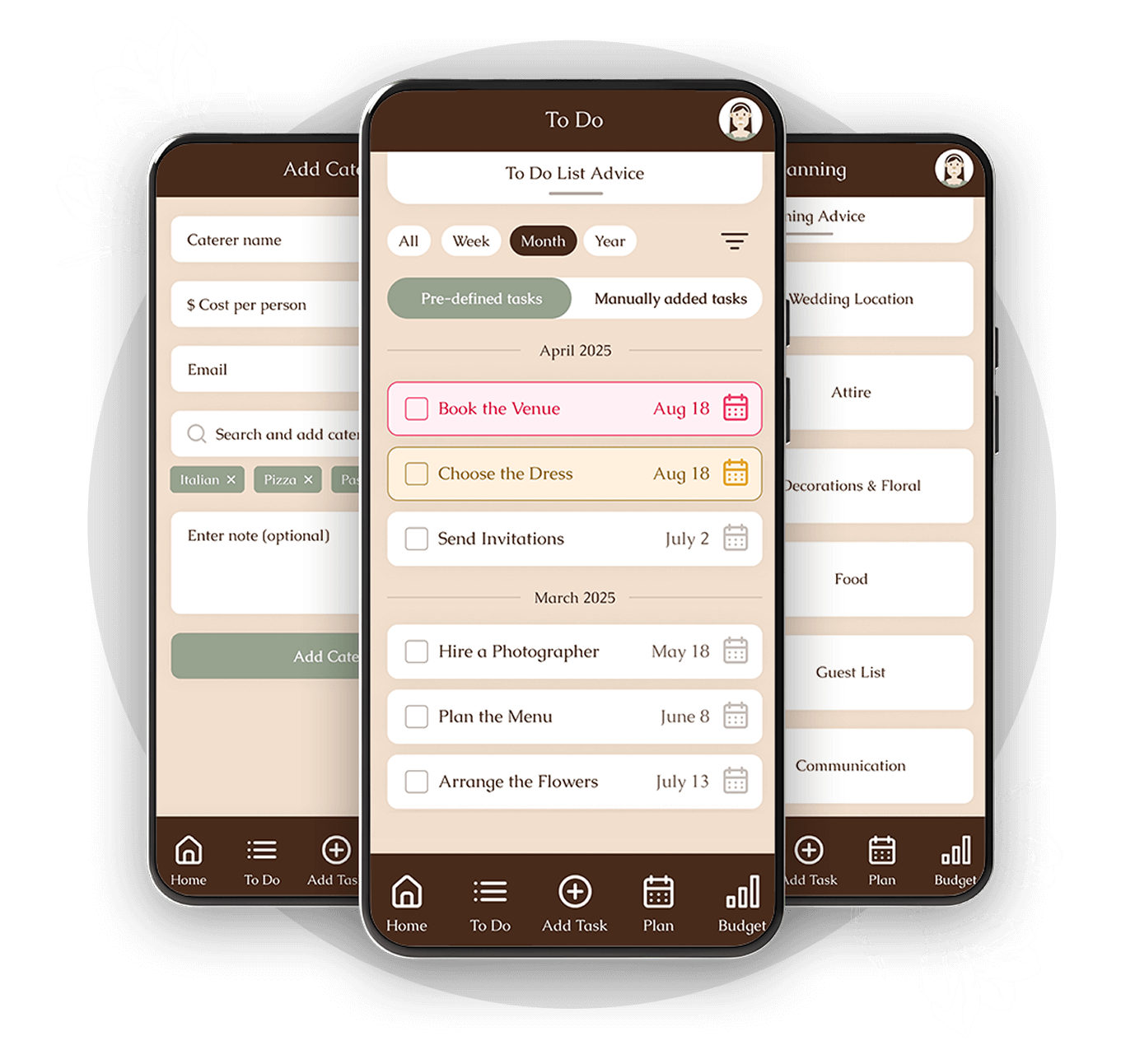
Tools that build plans around your actual date help here. When tasks appear based on time instead of tradition, you stop worrying about what you might be forgetting. If your wedding is three months away, the plan adjusts. If you have more time, it stretches. Either way, you focus on what matters this week, not everything that exists.
Let Budget Visibility Replace Budget Anxiety
Budget stress often lives in silence. When you plan alone, there is no one to reality-check spending worries with you. Numbers float in your head without context. Anxiety grows.
Clear estimates change that dynamic. When you see how choices affect the overall plan, fear loses some of its grip. You stop guessing. You start responding.
At Bridal Your Way, we see solo planners relax when they can view costs as flexible parts of a whole. You pick what matters most, skip what does not, and watch the plan adjust in real time. This approach keeps finances visible without turning them into a source of constant tension.
Stop Trying to Hold Everything in Your Head
Mental overload sneaks up during solo planning. You remember deposits, emails, fittings, and deadlines until one slips through. That moment creates panic, even if the issue is small.
Writing things down helps, but structure matters more. A scattered list still demands memory. A clear checklist that updates as you go lifts that weight.
When reminders exist outside your head, stress eases. You no longer replay tasks at night or worry about missing something important. Planning feels calmer because your mind stops acting as storage.
Build Emotional Buffer Into Your Planning Style
Planning alone can feel isolating. Even small decisions carry emotional weight when no one shares them with you. Second-guessing appears quickly. Fatigue follows.
You can soften this by creating space between planning sessions. Set days where you do nothing wedding-related. Review what you have completed instead of focusing on what remains. Progress often hides behind unfinished items.
An emotional buffer does not slow planning. It keeps you steady. When stress stays manageable, decisions feel clearer, and confidence grows naturally.
How Personalized Planning Tools Reduce Stress Long-Term
Stress fades when planning adapts to the person doing it. Fixed checklists assume time, money, and support that many brides do not have. Personalized systems respond to reality instead.
At Bridal Your Way, we design tools for people who plan independently. You build your wedding plan around your budget, priorities, and timeline. The system shows you what to do and when, without asking you to follow someone else’s pace. This matters deeply in solo wedding planning, where structure replaces outside support.
Our app supports weddings planned in as little as three months. Tasks appear based on your date. Cost estimates adjust as choices change. DIY ideas sit next to vendor decisions, so nothing feels disconnected. The goal is calm, not control.
When planning tools adapt, stress drops over time. You stop reacting. You start trusting the process. Solo wedding planning becomes less about surviving the workload and more about moving through it with confidence.
Conclusion
Planning a wedding on your own teaches you how to make decisions without constant reassurance. It shows you where structure helps and where pressure comes from. Stress does not mean you are doing something wrong. It often means the plan does not match the planner.
As weddings continue to shift toward personal experiences, planning styles will follow. Tools that adapt, timelines that flex, and priorities that feel honest will shape calmer journeys. When planning supports your life instead of interrupting it, the process feels lighter. That calm stays with you long after the day itself.
FAQs
Is planning a wedding alone always stressful?
Not always. Stress rises when decisions lack order or visibility. Clear structure reduces that load.
How can I stay calm if my wedding is only a few months away?
Focus on sequence, not volume. Decide what matters now and ignore the rest until later.
What causes the most stress in solo planning?
Holding too many decisions at once and keeping everything in your head.
Are checklists helpful or overwhelming?
They help when they adapt to your timeline and priorities. Fixed lists often add pressure.
Can planning tools really lower anxiety?
Yes, when they offer clarity. Seeing tasks and costs clearly removes much of the unknown.