

The First 5 Financial Decisions That Shape Your Wedding
Money shapes your wedding long before the flowers arrive or the music starts. The first financial choices you make quietly influence every detail that follows. Stress usually comes from unclear spending, not from the celebration itself. Early structure creates breathing room later.
This guide walks through five financial decisions that form the backbone of budget-friendly wedding planning, so your choices feel steady and aligned with your life, not driven by pressure or outside expectations.
The First Five Financial Decisions That Define Your Wedding
A wedding budget is more than a number written in a notebook. It becomes the framework for every commitment, every contract, and every expectation. When financial clarity comes first, planning feels lighter and more controlled. Each of these decisions affects the next, often in ways couples do not notice at the beginning.
1. Setting a Realistic Total Budget
Excitement often pushes couples to start with an ideal number instead of a realistic one. Industry averages rarely reflect personal income, savings, or family contributions. A number borrowed from social media creates tension later.
Start with what is actually available. Look at savings. Discuss contributions openly. Consider monthly expenses and how long you want to plan. A shorter timeline sometimes limits impulse decisions, while a longer engagement can stretch spending over time.
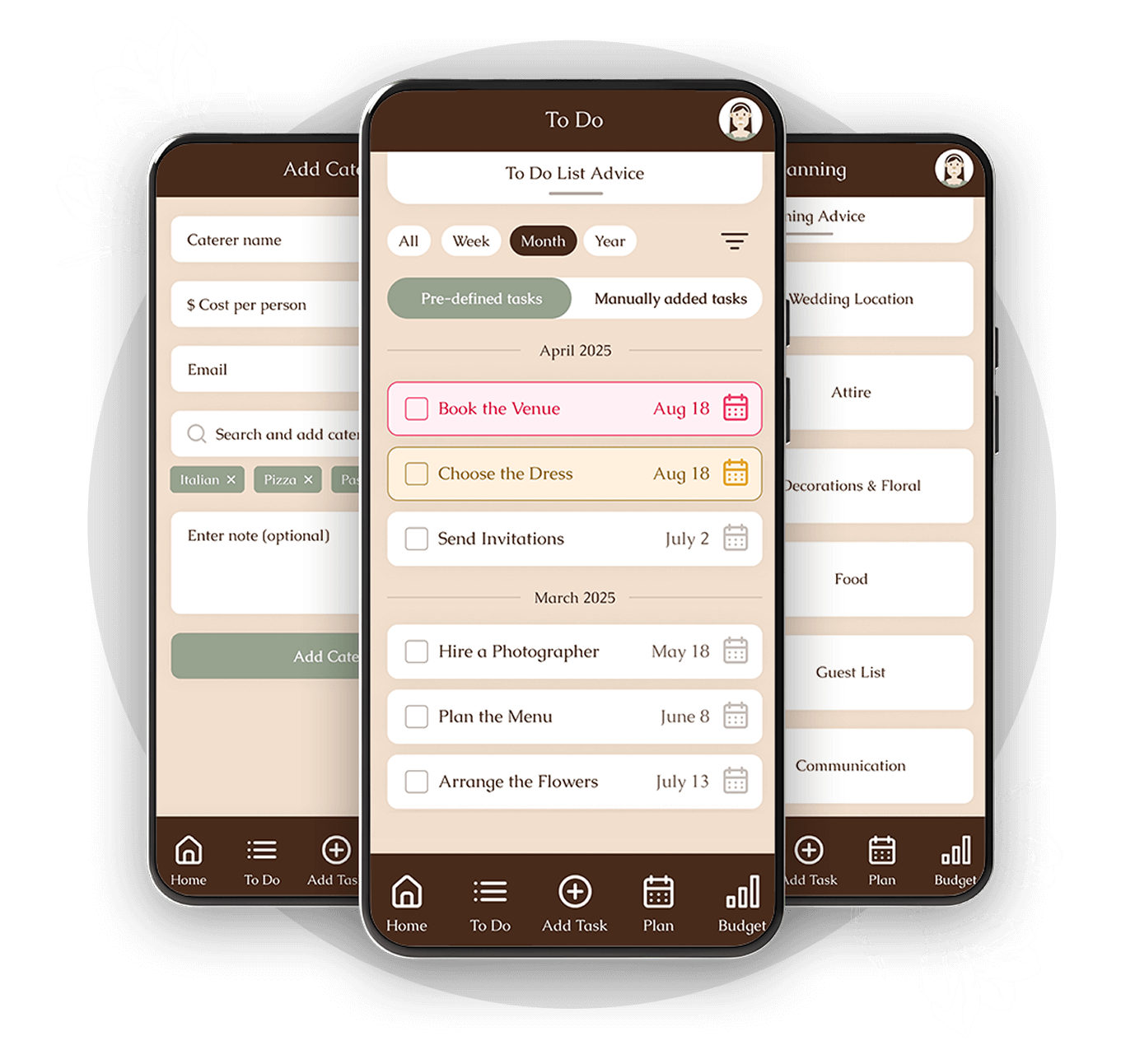
At Bridal Your Way, we begin with what we call “Set the Stage.” Budget, timeline, and guest list come first. Our app gives real-time cost estimates across categories, so you see how your total budget spreads out before you commit to vendors. That early visibility changes everything. Instead of guessing, you plan from solid ground.
2. Deciding What Actually Matters to You
Pressure often hides inside wedding planning. Families carry expectations. Social media adds noise. Trends make everything look necessary.
Clarity begins when you identify what truly matters. Choose three non-negotiables. Maybe photography feels important. Maybe food quality stands above décor. Maybe a live band brings energy you cannot replace.
Money follows priority. Spending more in one area means adjusting another. That trade-off feels easier when the decision reflects your values instead of someone else’s opinion.
Our approach centers on this idea. “Ditch the Extras. Plan Only What Matters to You.” Our app allows you to select essentials and skip items that do not fit your vision. Generic checklists often overwhelm couples with tasks they never wanted. We remove that clutter. Planning becomes focused and personal.
3. Determining Guest Count Before Booking Anything
Guest count acts as a multiplier. Every additional name affects seating, rentals, invitations, and location size. Couples sometimes book a location first, then adjust guest numbers later. That order locks them into higher expenses.
Set a clear range before signing contracts. An intimate guest list often opens room in the budget for better food or meaningful décor. A larger list requires different financial priorities.
Our app begins with guest list input for a reason. When numbers sit at the center of your plan, cost estimates reflect reality. Adjustments happen early, instead of weeks before the wedding. Tracking guests inside a structured system keeps spending aligned with your goals.
4. Aligning Timeline With Spending Strategy
Time influences costs more than many couples expect. A long engagement stretches decisions over months, which sometimes leads to small purchases that quietly add up. A shorter timeline demands focus. Fewer months can reduce second-guessing because decisions happen quickly.
Planning speed affects stress levels, too. Clear deadlines guide choices. Open-ended timelines invite hesitation.
We built our app to map out your unique schedule, even for celebrations as soon as three months away. Bite-sized tasks appear at the right moment, tied to your actual date. Instead of juggling everything at once, you handle one clear step at a time. That structure reduces panic spending, which often happens when deadlines feel overwhelming.
5. Choosing a Tracking System Before Money Moves
Many couples start tracking after deposits go out. At that point, control feels harder. Small expenses slip through cracks when there is no clear overview.
Financial tracking works best from day one. Seeing category breakdowns helps you adjust before problems grow. Visibility builds confidence.
Within Bridal Your Way, real-time cost guidance keeps categories organized. As you fill in details, your personalized wedding plan takes shape. Spending aligns with your original budget instead of drifting away from it. No chaos or constant second-guessing. Just a steady roadmap that reflects your decisions.
Financial Clarity Is the Foundation of a Stress-Free Wedding
Financial clarity creates space. Without it, every decision feels heavier than it should. With it, planning becomes intentional.
Each of the five decisions connects to the next. A realistic total budget shapes priorities. Priorities guide guest count. Guest count influences location choice. Timeline affects spending patterns. Tracking protects the entire structure.
Budget-friendly wedding planning is not about cutting everything down. It is about directing resources toward what feels meaningful. Removing unnecessary pressure changes the tone of your engagement.
Money will always play a role in wedding planning. Let it serve your vision instead of controlling it when structure supports your choices, excitement returns. Planning feels purposeful again.
Conclusion
Your wedding day reflects a series of decisions made long before the celebration begins. Financial clarity shapes those decisions in quiet but powerful ways. When you choose a realistic budget, clear priorities, defined guest numbers, aligned timelines, and early tracking, stress loses its grip.
Budget-friendly wedding planning becomes a thoughtful process instead of a reactive one. The result feels lighter. Your celebration stays personal, grounded, and fully aligned with the life you are building together.
FAQs
What is the first financial decision I should make when planning a wedding?
Start with a realistic total budget based on actual savings and contributions. Avoid using industry averages as your main guide.
How does guest count impact overall wedding costs?
Guest numbers affect restaurant orders, rentals, seating, location size, and even décor scale. Finalizing your count early prevents surprise expenses later.
Can I plan a wedding in a short timeframe without overspending?
Yes, focused timelines often reduce unnecessary purchases. Clear deadlines help you act decisively instead of lingering on optional upgrades.
Why is tracking expenses from the beginning important?
Early tracking provides visibility across categories. Adjustments become easier before deposits and contracts stack up.
Is a limited budget going to limit the experience?
Not at all. Strong priorities and structured planning often create more meaningful celebrations than open-ended spending ever could.