
How to Plan a Wedding Under $10,000 Without Feeling Like You’re Cutting Everything
Planning a wedding under $10,000 can sometimes feel like you’re playing a game you were never meant to win.
You search for wedding planning advice and find venue recommendations that could take up your entire budget. You look at “average” wedding costs that feel completely disconnected from what you can actually spend. And before long, wedding planning starts to feel less like building something exciting and more like making a very long list of everything you can’t afford.
But what if you approached your wedding budget from the opposite direction?
Instead of starting with the wedding industry’s version of a “normal” wedding and cutting things until the numbers work, start with your actual budget and build your wedding from there.
That’s the philosophy behind Bridal Your Way.
A $5,000, $7,500, or $10,000 wedding doesn’t need to be a watered-down version of a $30,000 wedding. It can be its own beautiful experience, designed intentionally around the people, moments, and details that matter most to you.
Here’s how.
1. Start With Your Real Number
Before you choose a venue, start a Pinterest board or fall in love with a photographer, figure out how much you can comfortably spend.
Not what the average couple spends.
Not what a wedding website tells you a wedding “should” cost.
Not what your cousin spent.
Your number.
Then, instead of looking at that number as a limitation, think of it as your starting point.
At Bridal Your Way, we like to think about wedding budgeting almost as if you were starting from zero.
If you had to create a meaningful celebration without spending anything, what would you absolutely need?
Then, as money becomes available, you begin adding the things that matter most to you.
Maybe $1,000 allows you to hire the photographer you really want. Another portion of the budget gives you a meal you’re excited to share with your guests. Another few hundred dollars transforms a simple space with flowers, candles, and linens.
Suddenly, budgeting isn’t only about taking things away.
It becomes about deciding what deserves to be added.
2. Choose Your Priorities Before You Choose Your Vendors
One of the easiest ways to overspend on a wedding is to treat every category as equally important.
It probably isn’t.
Sit down together and ask:
Maybe it’s:
incredible photos
really good food
having your entire extended family there
a beautiful dress
live music
gorgeous flowers
a particular venue
creating a relaxed weekend with the people you love
There isn't a correct answer. The important thing is knowing your answer before other people start telling you what your wedding needs.
Once you know your priorities, your budget decisions get much easier.
You aren't simply asking:
“Is this worth $1,500?”
You're asking:
“Is this worth $1,500 to us, compared with everything else we could do with that money?”
That second question can completely change the way you plan.
3. Be Willing to Rethink the Venue
For many couples, the venue is one of the biggest opportunities to dramatically change the wedding budget.
And this is where it pays to look beyond places marketed specifically as wedding venues.
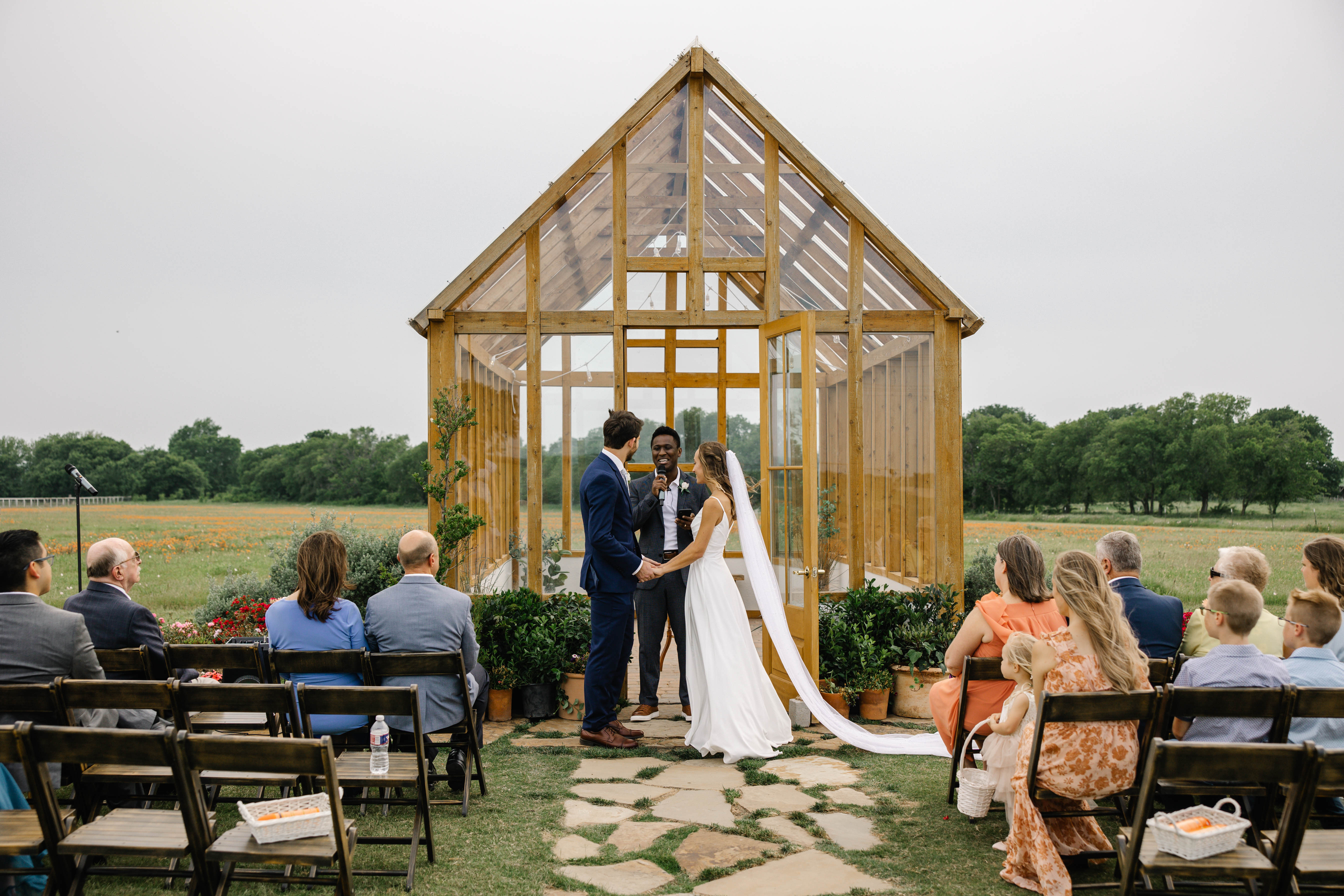
Churches, community centers, parks, backyards, restaurants, warehouses, clubhouses, and other “used spaces” can sometimes give you exactly what you need without the traditional wedding venue price tag.
Bekah and Brock's real wedding is a perfect example.
While planning their wedding, they were considering a venue that would cost around $1,800. They also had access to a church that would cost approximately $100.
The church came with a compromise: the ceremony and reception would need to happen in the same room, which meant the room would have to be flipped after the ceremony.
They ultimately decided the extra work was worth it.
That one decision freed approximately $1,700 in their wedding budget.
Instead of spending that money on the venue, they could use it for other priorities, including food.
The room flip itself? With careful planning and a team of helpers, it took roughly 20 minutes.
That's the kind of question we want you to ask throughout the planning process:
Could a little creativity here give us significantly more freedom somewhere else?
4. Remember That Every Guest Affects the Budget
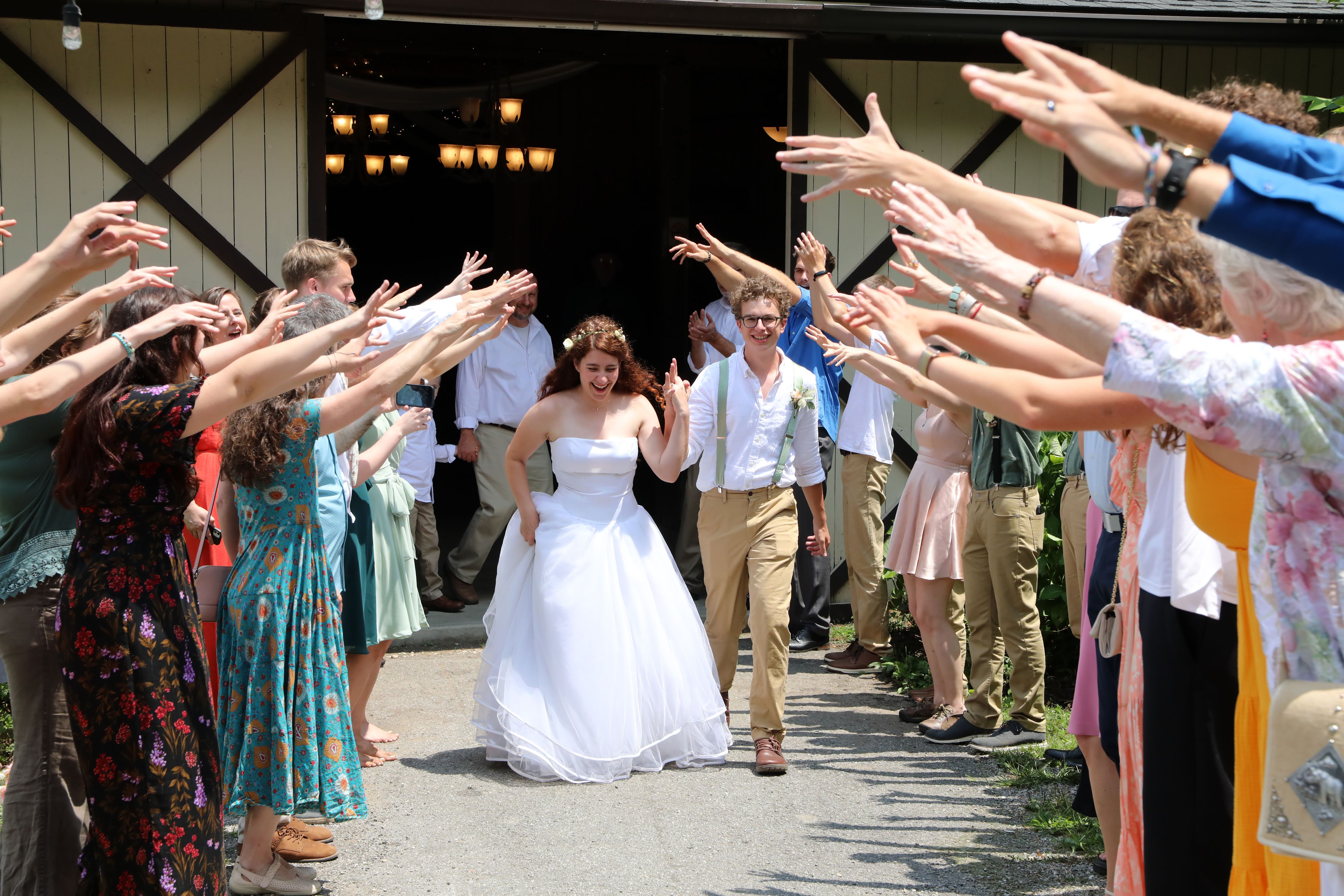
Your guest list isn't just a number.
Every additional guest can affect your food, drinks, tables, chairs, linens, invitations, favors, and even the size of the venue you need.
That doesn't mean the answer is automatically to have a tiny wedding.
If having 100 people you love in one room is one of your biggest priorities, fantastic. Your budget should reflect that.
But your guest list shouldn't be built entirely around obligation either.
Think about who you genuinely want beside you as you celebrate your marriage.
We like to describe an invitation as a “magic ticket” to your wedding.
Those tickets should go to people who love you, support your relationship, and respect the choices you're making, including your budget.
A smaller guest list isn't always a sacrifice.
Sometimes, it's what gives you the freedom to create a better experience with the people who matter most.
5. Get Creative With Food Before Assuming You Need Traditional Catering
Food can quickly become one of the largest wedding expenses, particularly as your guest count grows.
But “wedding food” doesn't have to mean a traditional plated dinner.
Depending on the wedding, alternatives could include:
buffet-style service
restaurant catering
pasta or potato bars
grazing tables
dessert bars
partial DIY catering
help from family or friends for smaller celebrations
The important thing isn't whether your dinner looks like somebody else's wedding dinner.
It's whether your guests are fed well and the option works for your particular wedding.
This is another reason Bekah and Brock's venue decision mattered so much.
Had they chosen the more expensive venue, they likely would have needed to make a much bigger compromise with their food budget. Choosing the $100 church gave them more freedom in another category they valued.
That's budget planning at its best.
You're not simply spending less.
You're moving money toward what matters more.
6. DIY Strategically, Not Automatically
DIY can save a lot of money.
But that doesn't mean you need to DIY your entire wedding.
Instead, ask:
Where will our time and effort actually make a meaningful difference?
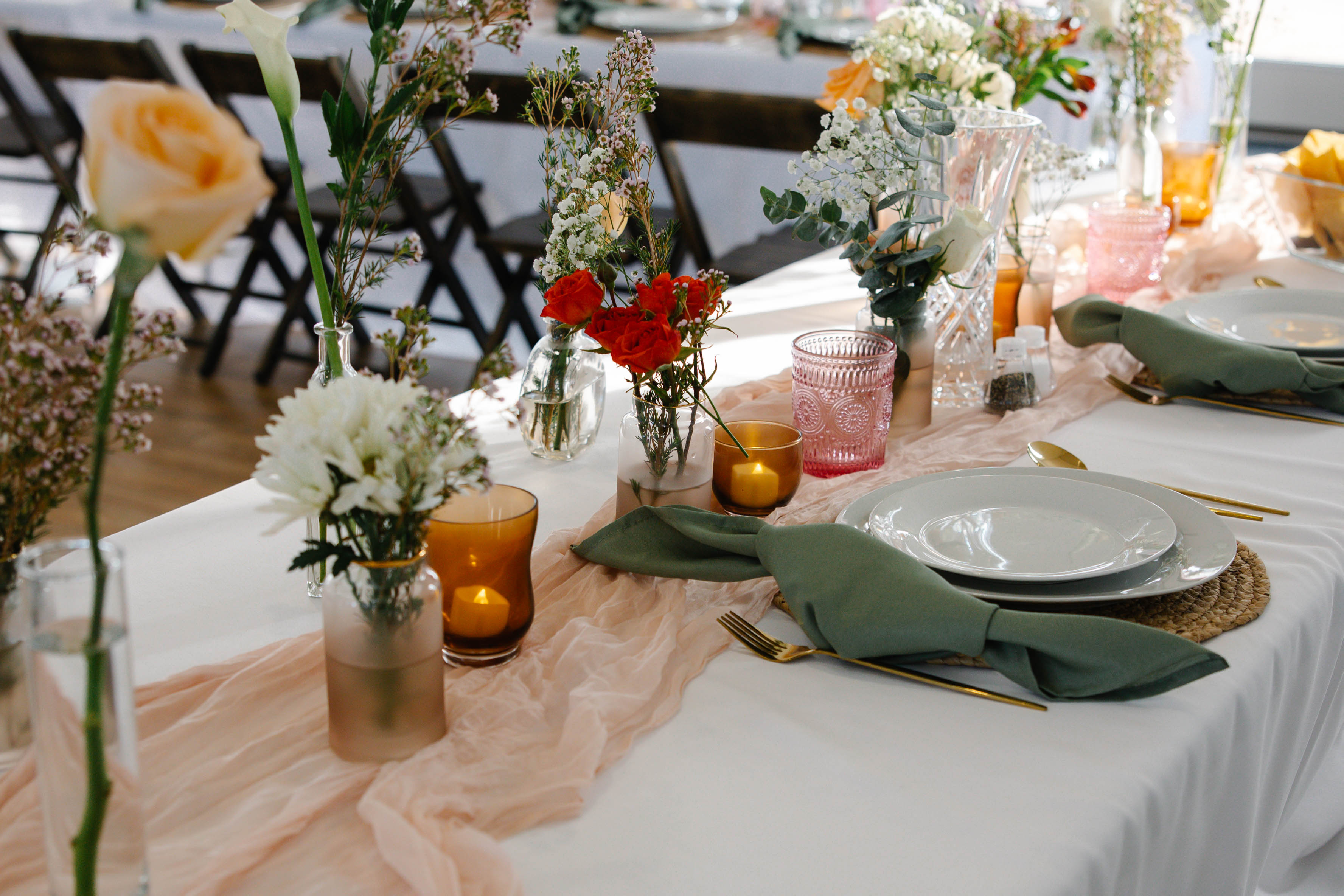
Flowers are a great example.
You might hire a florist for the pieces that feel intimidating or especially important, while creating simpler arrangements yourself.
You can also choose flowers that are easier to work with, use fewer varieties throughout the wedding or gather friends and family for a flower-arranging afternoon.
Bekah and Brock incorporated DIY florals into their wedding, helping them create a beautiful look while staying within their overall $7,500 budget for 90 guests.
And remember: DIY doesn't have to mean doing everything alone.
It can mean doing things together.
Those afternoons arranging flowers, decorating tables, addressing invitations or building centerpieces can become part of the wedding experience itself.
7. Make Every Decor Dollar Work Twice
Before buying decor for your ceremony and then buying completely different decor for the reception, ask:
Where else can we use this?
Your ceremony arch might later become the backdrop behind your cake table.
Bridesmaids' bouquets can become reception arrangements.
A welcome sign can move to another area.
Candles, greenery and florals can travel from one part of the celebration to another.
Even your ceremony and reception themselves can share the same space, as Bekah and Brock proved.
You paid for those items once.
Let them work more than once.
And after the wedding? Consider reselling what you don't plan to keep.
There are other budget-conscious couples searching for decor, linens, centerpieces and wedding items too. Recouping even part of what you spent effectively lowers your final wedding cost.
8. Don't Underestimate Your Community
You don't necessarily need to hire someone for every single task.
Think about the people around you and what they genuinely enjoy doing.
Maybe someone is wonderful with flowers.
Someone else loves baking.
You have a friend who can confidently MC.
Your extremely organized dad would genuinely enjoy mapping out exactly where every reception table should go.
That last example is actually part of Bekah and Brock's story.
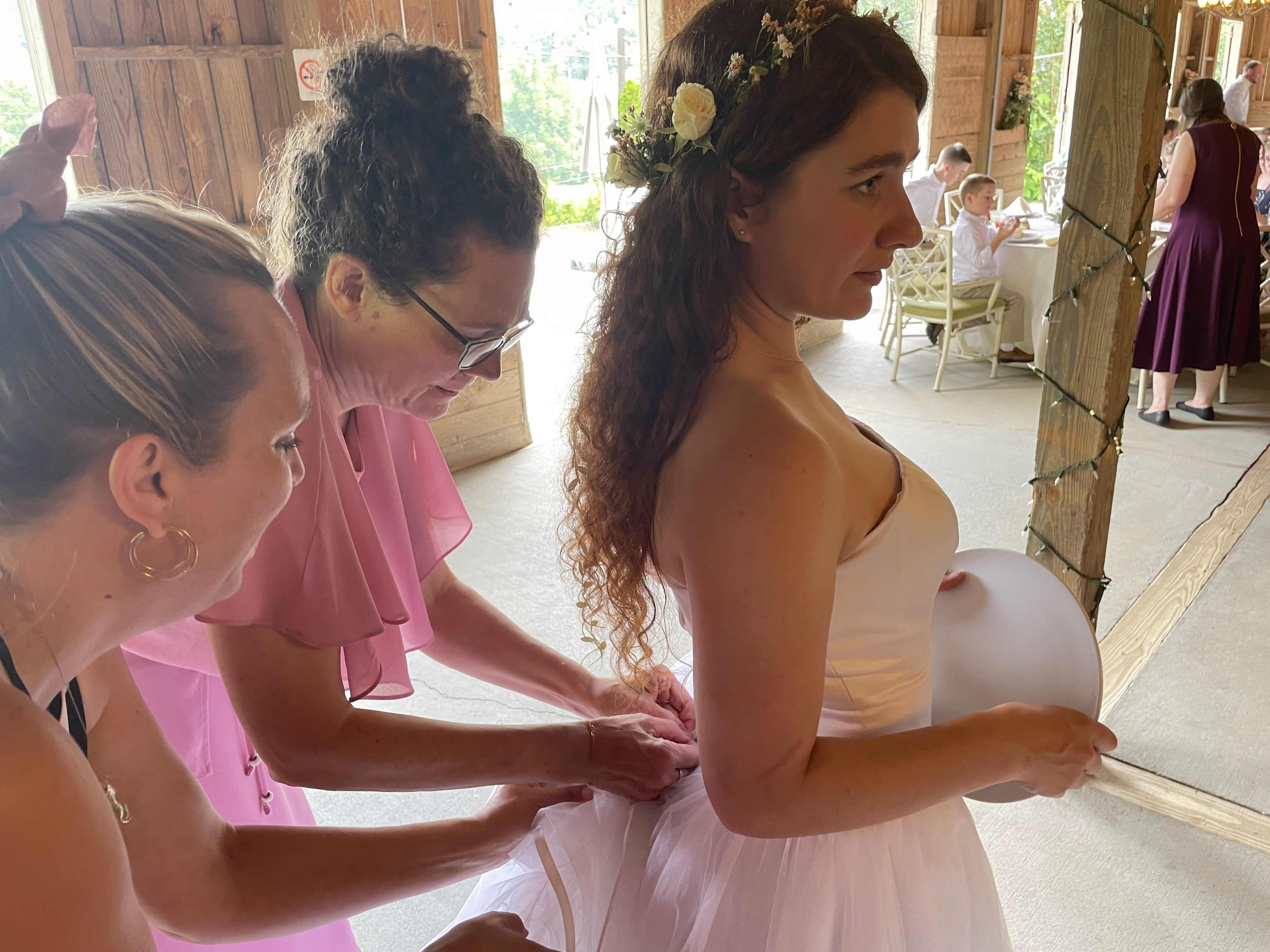
For their room flip, Bekah's dad mapped out the reception layout beforehand and placed small pieces of tape on the floor marking where the tables needed to go.
Tablecloths were ironed and ready in another room. Supplies were organized. Everyone knew the plan.
That's part of why the transformation could happen so quickly.
The lesson isn't simply “ask people to work for free.”
It's to recognize that sometimes the people who love you actually want to participate.
Give them specific roles, make the plan clear, and let your community become part of creating the day.
9. Stop Spending Money Just Because “That's What Weddings Cost”
This might be the most important rule.
There will be moments when someone tells you:
“Well, that's just what weddings cost.”
But that isn't always a good enough answer.
There will also be things Pinterest tells you every wedding needs.
You don't have to care.
If something costs $2,000, the question isn't whether $2,000 is a “normal” price.
The question is:
Does this matter enough to us to spend $2,000 of our budget on it?
Sometimes the answer will absolutely be yes.
Spend it.
But when the answer is no, give yourself permission to find another way, or skip it completely.
10. Give Yourself Permission to Change the Plan
Wedding planning is a process.
You might begin absolutely convinced you want one thing and discover three months later that something else matters more.
That's okay.
Bekah and Brock didn't immediately choose the $100 church.
They considered their options, talked through the compromises, went away and thought about it, and eventually came back with a different decision.
Your first budget doesn't have to be your final budget.
Your first idea doesn't have to be your final plan.
As you learn more about costs and discover what matters most to you, let the wedding evolve.
Changing your mind isn't failing at wedding planning.
Sometimes, it's exactly what good wedding planning looks like.
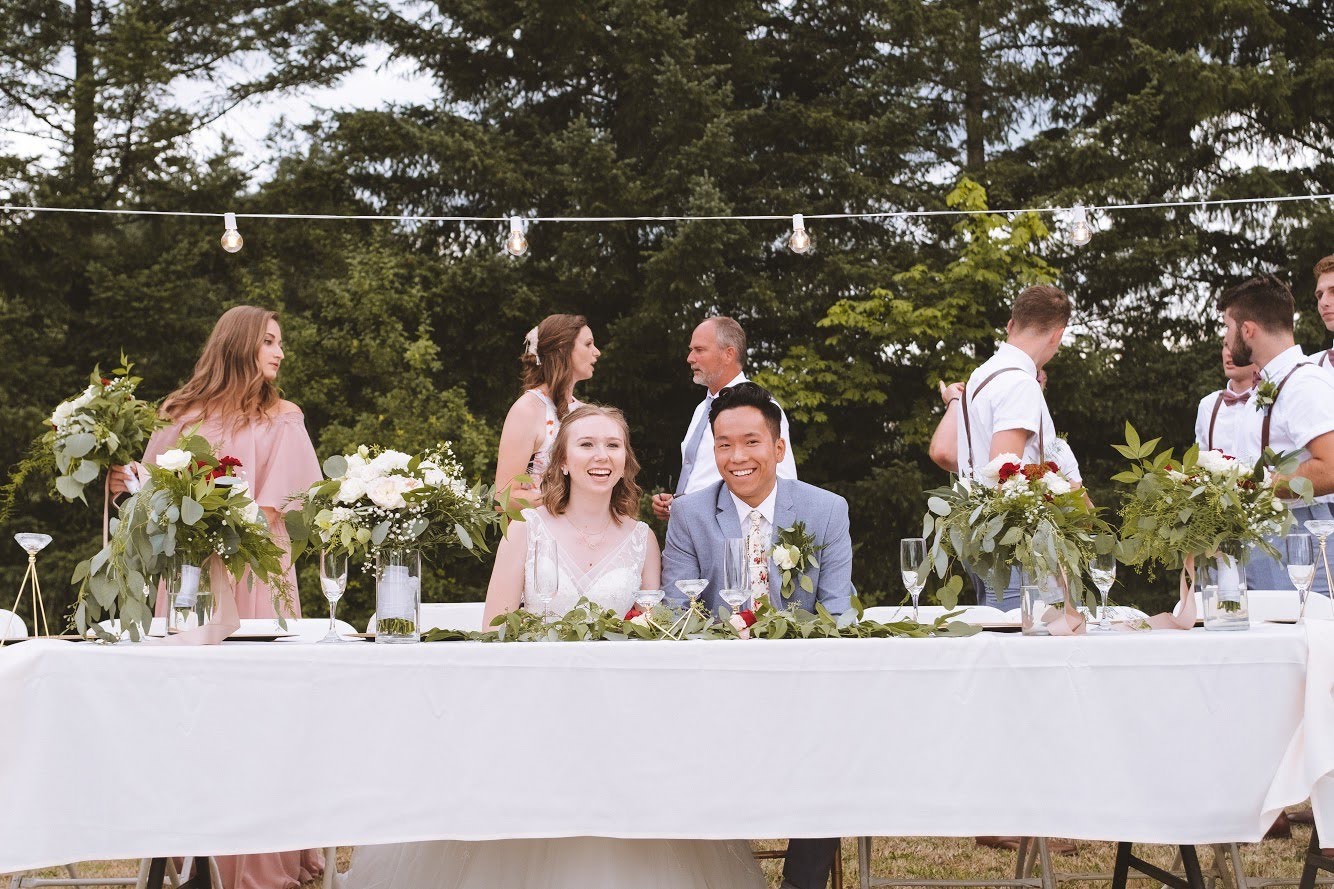
What Does a Beautiful Wedding Under $10,000 Actually Look Like?
It can look like 90 people celebrating together at a church.
It can look like flowers you arranged with people you love.
It can look like a room that changes from ceremony to reception in 20 minutes.
It can mean spending more on food because you spent less on your venue.
And it can include things you intentionally decided were worth splurging on.
A beautiful wedding isn't defined by how closely it resembles a traditional $30,000 wedding.
It's defined by whether the day feels like you.
Your budget doesn't decide whether your wedding is meaningful.
It simply gives you a framework for deciding where your money can create the most meaning.
And that's what planning your wedding your way is all about.
Ready to Start Planning Your Wedding Your Way?
Bridal Your Way is designed for couples planning with a real budget, not an imaginary industry average.
Start with what you have. Decide what matters. Build from there.
Your budget. Your priorities. Your wedding. Your way.